








If it feels like ChatGPT, Gemini, Claude, and Perplexity appeared out of nowhere and ended up everywhere, that's because they sort of did. Customers are researching services with them, teams are drafting emails and summarizing documents with them, and Google uses one to generate those AI Overviews now appearing above every other search result.

Whether you've touched any of these tools yourself or not, you're already operating in a world shaped by them.

You don't need a technical background to understand what's going on. If you run a local business, though, it's worth knowing what large language models are, because they're already changing how customers find you.

Continue Reading >

Running Local SEO across a dealer group is a fundamentally different challenge than optimizing a single rooftop, and most groups are getting it wrong in the same ways. The strategies that look appealing on paper, like consolidating everything under one domain or templating content across locations, tend to actively hurt performance once you understand how Google evaluates local relevance.

The core issue is clarity. Google (and other search engines and LLMs) needs to understand, with as little ambiguity as possible, exactly who each of your dealerships is, what they sell, and where they're located. The more you blur those signals across a group, the harder it becomes to rank any individual location where it counts.

This post walks through the full framework for dealer group Local SEO: site structure, content, link building, and Google Business Profile governance.

Each section covers the most common mistakes and what to do instead, drawn from Dane Saville's 16 years of experience working directly with dealer groups on organic visibility.

Continue Reading >

The posts have been making the rounds for a while now. Someone runs a local business, tries a few AI tools, and announces they canceled their marketing agency and replaced everything with ChatGPT and a couple of automations. The numbers they throw around are hard to dismiss. The part they leave out is where it stopped working.

If you run a local business and you're weighing whether AI tools could genuinely replace what your agency does, that's a fair question. Some of what agencies charge for has gotten cheaper and faster with AI, and it would be dishonest to pretend otherwise. But there's a meaningful gap between using AI to move faster and handing your local visibility over to tools that have no idea what's happening in your market.

Here's an honest look at what AI handles well, where it falls apart for local businesses specifically, and how to tell whether what you're currently paying for is actually worth it.

Continue Reading >
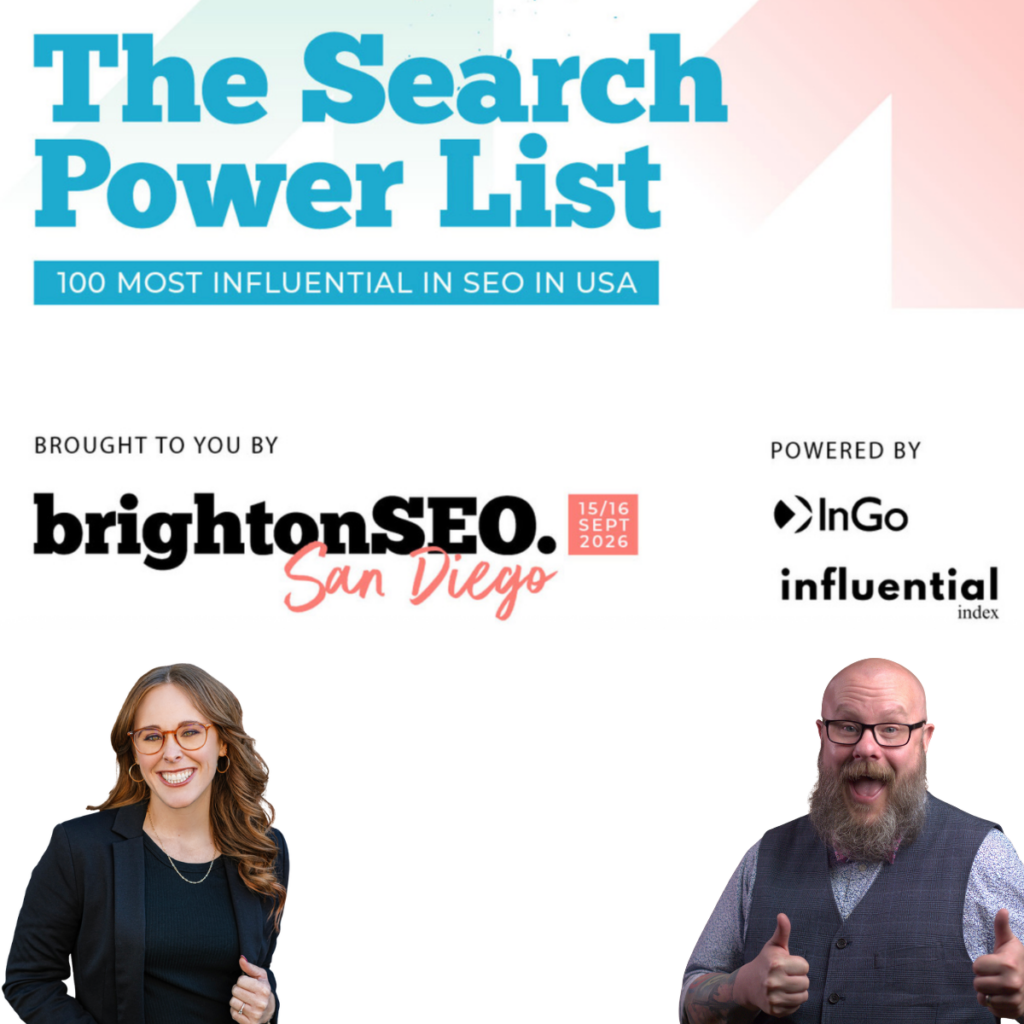
SearchLab Digital is proud to announce that Ashley Segura and Greg Gifford have been named in the inaugural Search Power List: 100 Most Influential in SEO in the USA. The Search Power List, presented by brightonSEO San Diego, recognizes professionals who have made a meaningful impact on the search marketing industry through education, innovation, thought leadership, community involvement, and contributions to the growth of SEO.
Continue Reading >
Where someone once Googled "plumber near me" and picked from a list of search results, a growing number of people are now opening ChatGPT or Gemini and asking it directly which plumber to call. They may receive recommendations, citations, or a shortlist of businesses from these AI platforms rather than a traditional page of search results. 


For a local business owner, that raises an obvious question: If AI platforms are deciding who to recommend in your area, what determines whether your business shows up?

That's what GEO is designed to address. If your Local SEO is already in decent shape, you're closer to being ready for it than you might think.

Continue Reading >
If you have Googled anything in the last year, you may have noticed that the results page looks different. Before any website links appear, there is often a big block of text right at the top of the page, written as a direct answer to your question, with no clicking required. For anyone running a local business, that's a fair thing to wonder (and possibly worry) about. If Google is answering questions before anyone clicks on anything, what does that mean for how customers find you?
Continue Reading >

Most PPC accounts are leaking money and not because the strategy is completely broken, but because the guardrails are missing.

Platforms like Google and Meta are getting smarter which means automation is improving, but there is still one major problem: If you feed these systems bad signals or give them too much control, they will spend your budget fast and often on the wrong things.

This conversation with Dane Saville and SearchLab PPC Team Lead Susan Yen gets into what is actually happening inside your accounts and what you need to do about it.

Continue Reading >

Most businesses set up their Google Ads the same way they'd use a crockpot. Toss in a budget, launch a few campaigns, and check back later expecting leads to be ready.

Except unlike a crockpot, the result isn't some delicious meal, it's usually a mess of results and doesn't taste nearly as good. 

Ad accounts drift and budgets quietly bleed out. Broad match keywords start pulling in searches that have nothing to do with your business. Conversion tracking stops firing and nobody notices. Google's automated recommendations get clicked through without a second thought. On paper, everything looks fine, but meanwhile your sales team is scratching their heads wondering why they were served a sloppy mess of leads.

SearchLab's PPC Team Lead Susan Yen dug into all of this during a recent webinar, covering keyword match types, conversion tracking, and how Google's push toward automation is reshaping paid search. If you're spending real money on PPC, it's worth a watch.

Continue Reading >

A handful of fabricated reviews can destroy a small business overnight, which is precisely why review extortion scams are among the fastest-growing threats facing local businesses today.

One morning your business enjoys a healthy 4.8-star rating; by the next, you're staring at a flood of 1-star reviews and a WhatsApp message demanding payment to make it stop.

What was once an occasional horror story has quietly become one of the most common spam attacks targeting local businesses, particularly smaller ones, where a damaged review score can directly gut both leads and revenue.

Continue Reading >

Search has shifted dramatically in just the last few years. Today's car buyer does a lot more homework before they ever reach out including but not limited to: comparing options, reading reviews, and bouncing between Google Maps, organic results, AI overviews, and yes, even ChatGPT. 

Many dealerships are still running the same SEO playbook from 2018: Cookie-cutter inventory pages, thin service content that nobody's reading, OEM copy pasted across half the site, and "Near me" optimization that starts and ends with a title tag.

That approach is outdated, and it's leaving real traffic, real leads, and real showroom visits behind.

In this episode of More Than You Can Chew, we get into automotive SEO from the ground up: what actually matters right now, where most dealers are still getting it wrong, and what the future of search looks like for the industry.

Continue Reading >